Benefits of eating pumpkin seeds
🎯 1. Rich in Nutrients
Pumpkin seeds are packed with:
- Healthy fats (omega-6 & omega-9)
- Protein
- Fiber
- Magnesium
- Zinc
- Iron
- Vitamin E
- Antioxidants
❤️ 2. Good for Heart Health
- High magnesium content helps regulate blood pressure.
- Healthy fats support cholesterol balance.
- Antioxidants help protect blood vessels.
🧠 3. Supports Better Sleep
Pumpkin seeds contain:
- Tryptophan, an amino acid that promotes sleep.
- Magnesium, which helps relax muscles and improve sleep quality.
Eating them with a carb (like fruit) can enhance the effect.
💪 4. Improves Immune Function
Rich in zinc, which is essential for:
- Fighting infections
- Healing tissues
- Maintaining immune strength
🩺 5. Helps Control Blood Sugar
Fiber + protein + healthy fats help stabilize blood sugar and reduce spikes.
🧘 6. Reduces Inflammation
High antioxidant levels (vitamin E & polyphenols) fight inflammation and oxidative stress.
🩸 7. Supports Prostate & Urinary Health
Pumpkin seed oil is linked to:
- Reduced symptoms of benign prostatic hyperplasia (BPH)
- Improved bladder function
🦴 8. Strengthens Bones
Magnesium plays a key role in maintaining strong bones and supporting calcium absorption.
🌱 9. Great Source of Plant-Based Protein
1 ounce (28g) provides 7 grams of protein, making it perfect for vegetarians/vegans.
💇♀️ 10. Good for Hair & Skin
The zinc and vitamin E help:
- Promote healthy hair growth
- Support collagen production
- Improve skin healing
Side effects of eating pumpkin seeds
⚠️ 1. High in Calories
Pumpkin seeds are nutrient-dense but calorie-dense.
Eating too many can lead to weight gain if you’re not careful with portions.
😖 2. May Cause Digestive Issues
Because they contain fiber and fat:
- Bloating
- Gas
- Constipation or diarrhea
can occur if eaten in large amounts, especially without enough water.
🧂 3. Salted Pumpkin Seeds Can Raise Sodium Levels
Many store-bought seeds are heavily salted, which can:
- Increase blood pressure
- Cause water retention
- Be harmful for heart health
Choose unsalted or lightly salted versions.
🥴 4. Possible Allergic Reactions
Although rare, some people may experience:
- Rash
- Itching
- Swelling
- Difficulty breathing
If you have nut/seed allergies, be cautious.
🦷 5. Hard Texture Can Affect Teeth
Eating pumpkin seeds with the shell may:
- Crack or damage teeth
- Cause gum irritation
Opt for shelled seeds (pepitas) if you have dental concerns.
🍽️ 6. May Trigger Stomach Discomfort When Eaten on an Empty Stomach
Some people experience:
- Stomach cramps
- Nausea
because pumpkin seeds are naturally high in fat.
🧪 7. Might Interact With Certain Medications
Large amounts of pumpkin seeds (or pumpkin seed oil) may interact with:
- Diuretics (due to their mild diuretic effect)
- Blood pressure medications
- Diabetes medications (because they can lower blood sugar)
If you take these regularly, eat moderate amounts.
🧼 8. Mold Risk if Stored Improperly
Seeds can go rancid or develop mold if exposed to:
- Heat
- Light
- Moisture
Always store them in an airtight container in a cool, dark place.
Best time to eat pumpkin seeds
🥣 1. Eat Them Raw (Most Nutritious)
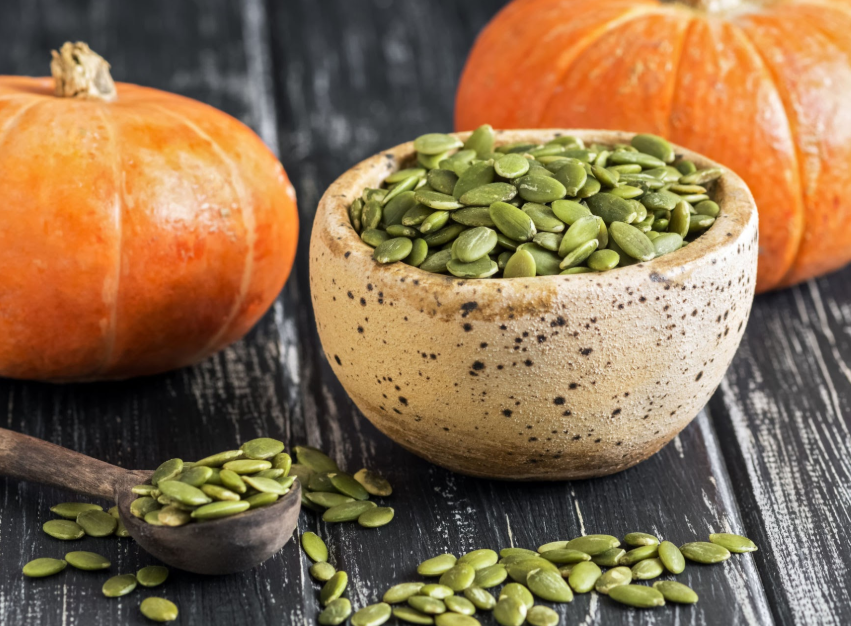
Raw pumpkin seeds (pepitas) preserve all vitamins, minerals, and healthy fats.
Just rinse, dry, and eat — or buy raw, unsalted seeds.
Best for: immune support, sleep, heart health.
🔥 2. Lightly Roasted (More Flavorful)
Toss seeds with a little oil and roast at 160–170°C (325°F) for 10–15 minutes.
This improves taste and crunch while keeping nutrients.
Tips:
- Add spices: salt, garlic, paprika, chili, cinnamon, or honey.
- Don’t roast too long — it destroys healthy fats.
🧂 3. Eat With the Shell
If you enjoy the crunch, eat whole pumpkin seeds with shells (usually from homemade roasted seeds).
They add extra fiber.
But: They can be hard on teeth or digestion for some people.
🥛 4. Soaked or Sprouted
Soak seeds in water for 6–8 hours.
This reduces phytic acid and makes them easier to digest.
Best for: sensitive stomach, better nutrient absorption.
🍽️ 5. Add to Meals
Pumpkin seeds work great as toppings. Try them on:
- Oatmeal or porridge
- Yogurt or smoothie bowls
- Salads
- Soups
- Stir-fries
- Rice or quinoa
- Baked goods (bread, muffins)
🥤 6. In Smoothies
Blend 1–2 tablespoons of pepitas into smoothies for protein, magnesium, and energy.
🍫 7. Pumpkin Seed Butter
Like peanut butter — creamy and nutritious.
Spread on toast, apples, or use in baking.
🍪 8. Mix Into Trail Mix
Combine with:
- Almonds
- Raisins
- Dark chocolate
- Cashews
for a balanced snack.
🥗 9. Add to Energy Balls or Protein Bars
Mix with dates, oats, and nuts to make homemade snacks.
🥄 How Much Should You Eat Daily?
A healthy daily amount is:
1–2 tablespoons (15–30g)
or