
Kiwi fruit —also known as kiwifruit or Chinese gooseberry—is a small, nutrient-dense superfood loved for its tangy-sweet flavor and vibrant green color. Packed with vitamins, antioxidants, and fiber, kiwi is one of the healthiest fruits you can add to your diet.
In this guide, we cover health benefits, nutritional value, side effects, how to eat kiwi, and more
You buy Kiwi fruit Link
What Is Kiwi Fruit?
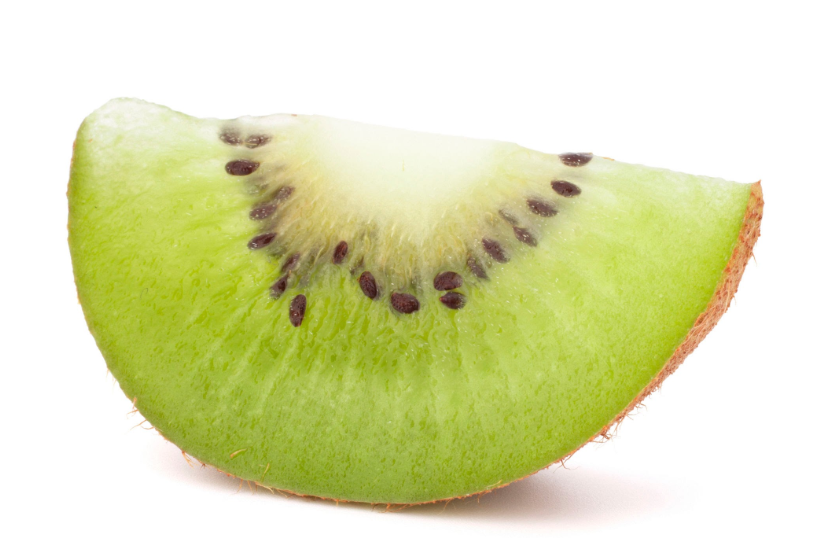
Kiwi is a tropical berry originally from China, now grown across New Zealand, Italy, and many other countries. It has a fuzzy brown skin and bright green or golden flesh with tiny edible seeds. Despite its small size, kiwi contains more vitamin C than an orange!
Top Health Benefits of Kiwi Fruit
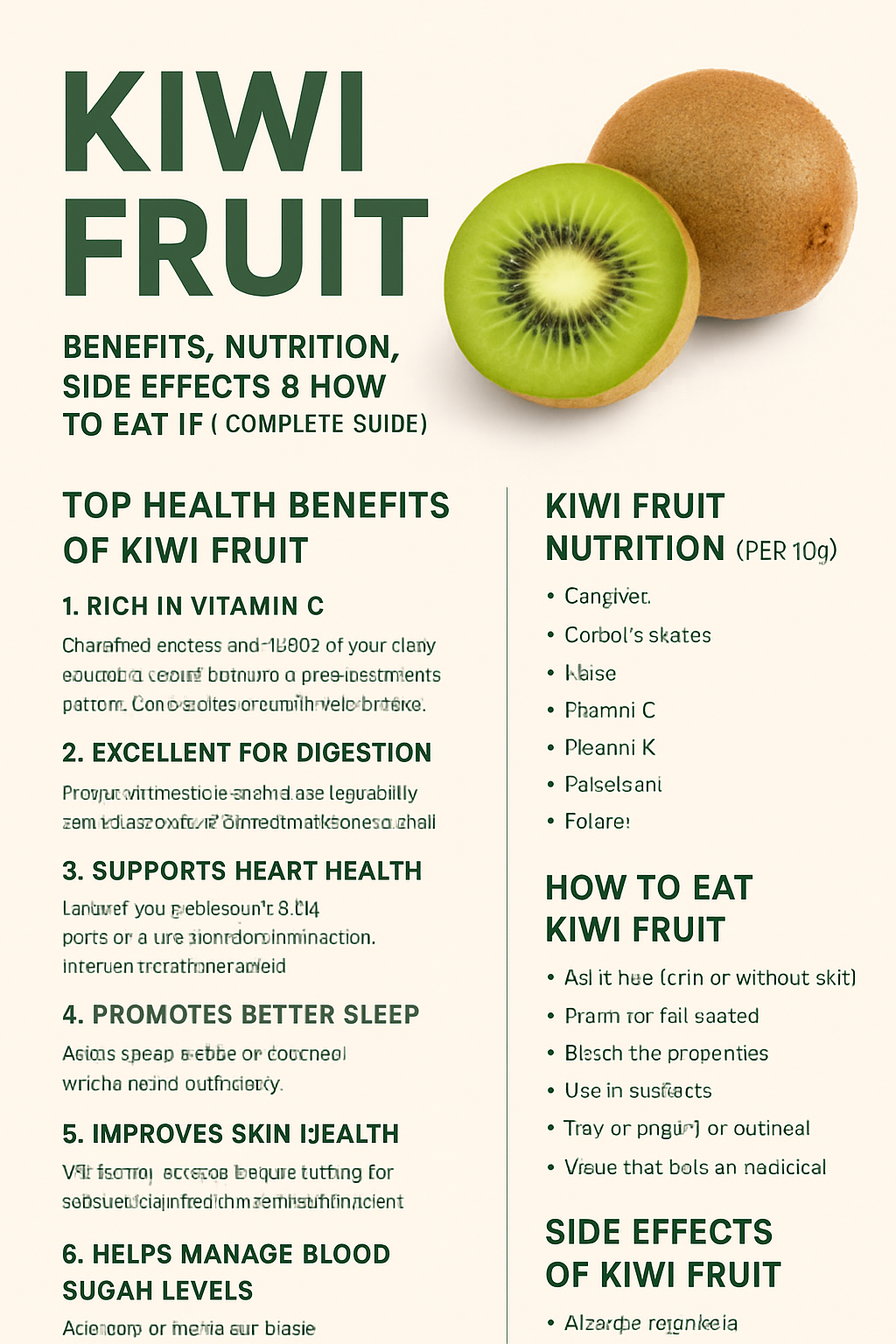
1. Rich in Vitamin C
One kiwi provides over 100% of your daily vitamin C needs.
Vitamin C boosts immunity, supports collagen production, and acts as a powerful antioxidant.
2. Excellent for Digestion
Kiwi contains:
- Fiber – improves gut health and regularity
- Actinidin – a natural enzyme that helps break down protein
This makes kiwi great for reducing bloating and aiding digestion.
3. Supports Heart Health
Kiwi fruit may help:
- Lower bad cholesterol (LDL)
- Reduce blood pressure (thanks to potassium)
- Improve blood flow
Its antioxidants also protect the heart from oxidative stress.
4. Promotes Better Sleep
Studies show that eating kiwi before bed may help improve sleep quality due to:
- Antioxidants
- Serotonin (a natural sleep-regulating compound)
5. Improves Skin Health
Vitamin C + antioxidants = glowing skin.
Kiwi helps with:
- Collagen production
- Reducing wrinkles
- Healing damaged skin
6. Helps Manage Blood Sugar Levels
Kiwi has a low glycemic index (GI), so it doesn’t spike blood sugar levels.
It’s a great fruit choice for people with diabetes.
Kiwi Fruit Nutrition (Per 100g)
- Calories: ~61
- Carbohydrates: 15 g
- Fiber: 3 g
- Vitamin C: 92.7 mg
- Vitamin K: 40 µg
- Potassium: 312 mg
- Folate: 25 µg
Kiwi is low in calories and high in nutrients—perfect for weight-conscious eaters.
How to Eat Kiwi Fruit
You can enjoy kiwi in many ways:
✔ Eat it raw (with or without the skin)
✔ Add to fruit salads
✔ Blend into smoothies
✔ Use in desserts
✔ Top on yogurt or oatmeal
✔ Make kiwi juice or mocktails
Side Effects of Kiwi Fruit
Kiwi is safe for most people, but some may experience side effects:
1. Allergic Reactions
Symptoms may include:
- Itching in the mouth
- Swelling of lips or tongue
- Rash
- Difficulty breathing (rare but serious)
People allergic to latex, papaya, or pineapple may also react to kiwi.
2. May Cause Stomach Issues
Eating too much kiwi can lead to:
- Diarrhea
- Abdominal discomfort
- Bloating
Because of its high fiber content, moderation is key.
3. Blood-Thinning Effects
Kiwi contains vitamin K and natural compounds that may affect blood clotting.
People on blood-thinner medications should consult a doctor before increasing intake.
Who Should Avoid Eating Kiwi?
- People with kiwi allergy
- Those taking blood-thinning medications
- Individuals with sensitive digestive systems
FAQs About Kiwi Fruit
1. Is it OK to eat kiwi every day?
Yes! One or two kiwis a day is generally healthy and safe.
2. Can you eat the kiwi skin?
Absolutely. The skin is rich in fiber and antioxidants. Wash it well first.
3. Which is better: green kiwi or golden kiwi?
Golden kiwi is sweeter and has slightly more vitamin C, while green kiwi has more fiber.
4. Is kiwi good for weight loss?
Yes — it’s low in calories, high in fiber, and very filling.
Final Thoughts
Kiwi fruit is a nutrient powerhouse that supports immunity, digestion, skin health, heart health, sleep, and weight management.
While it’s safe for most people, those with allergies or digestive sensitivities should be cautious.